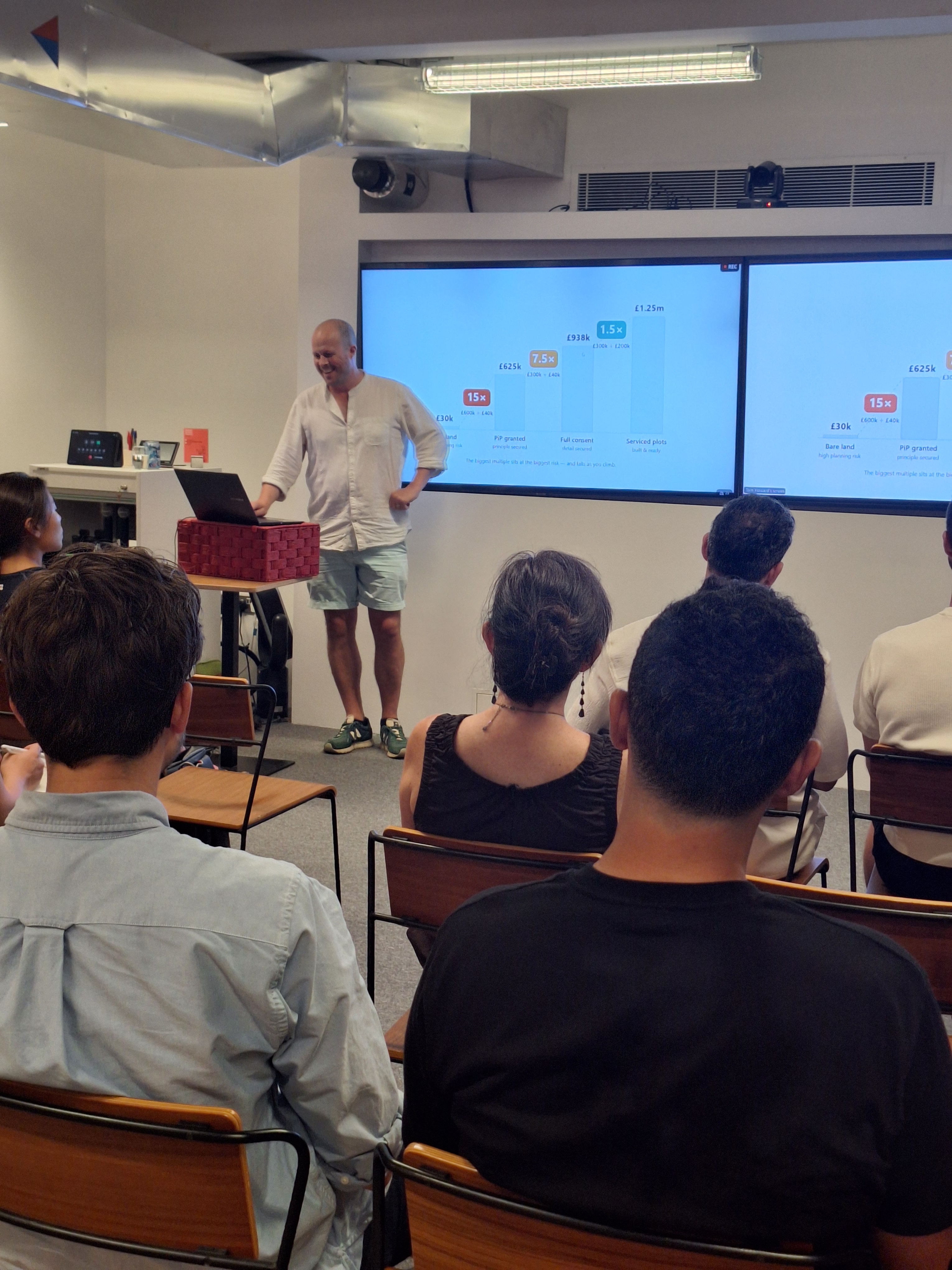
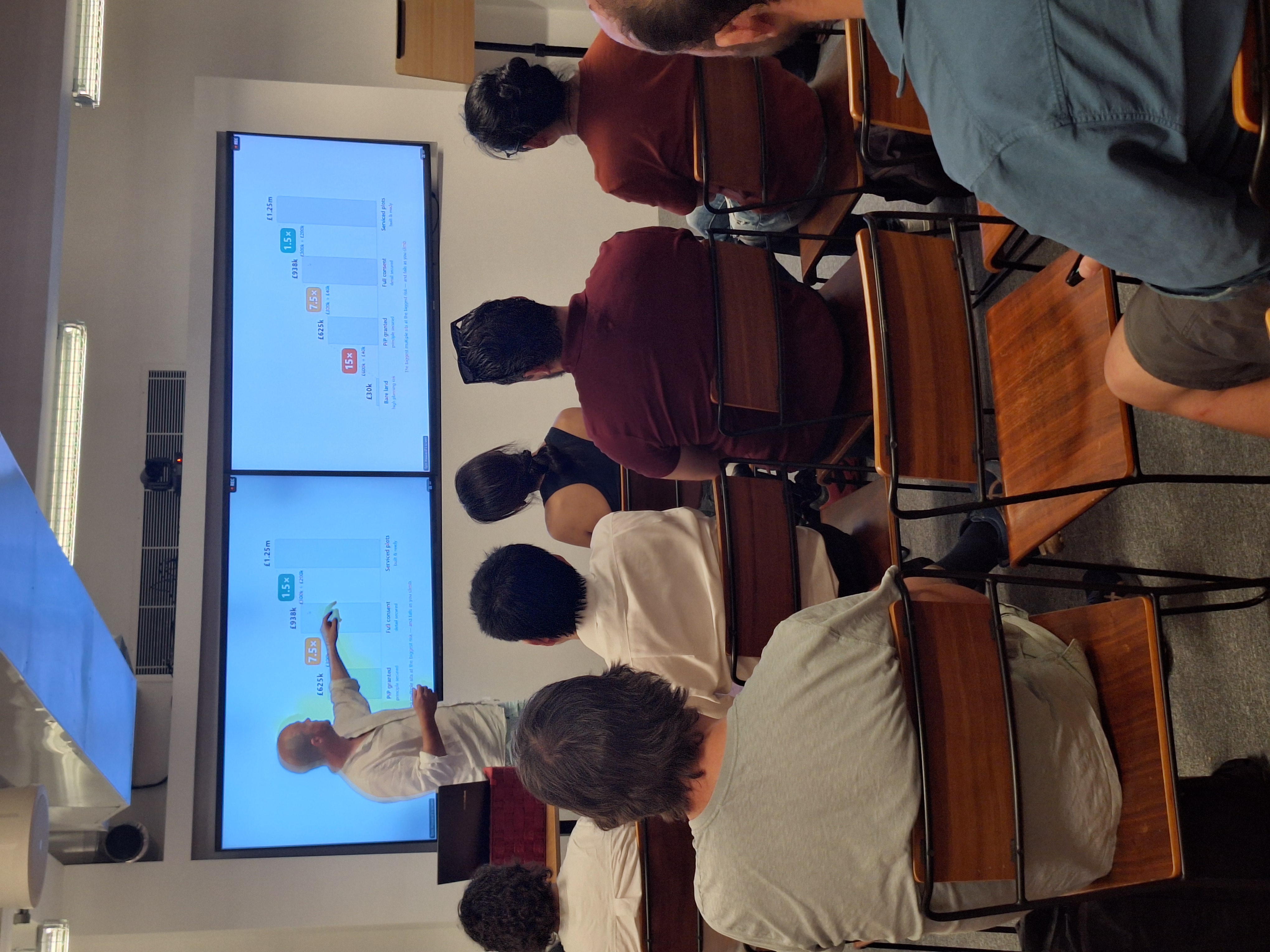
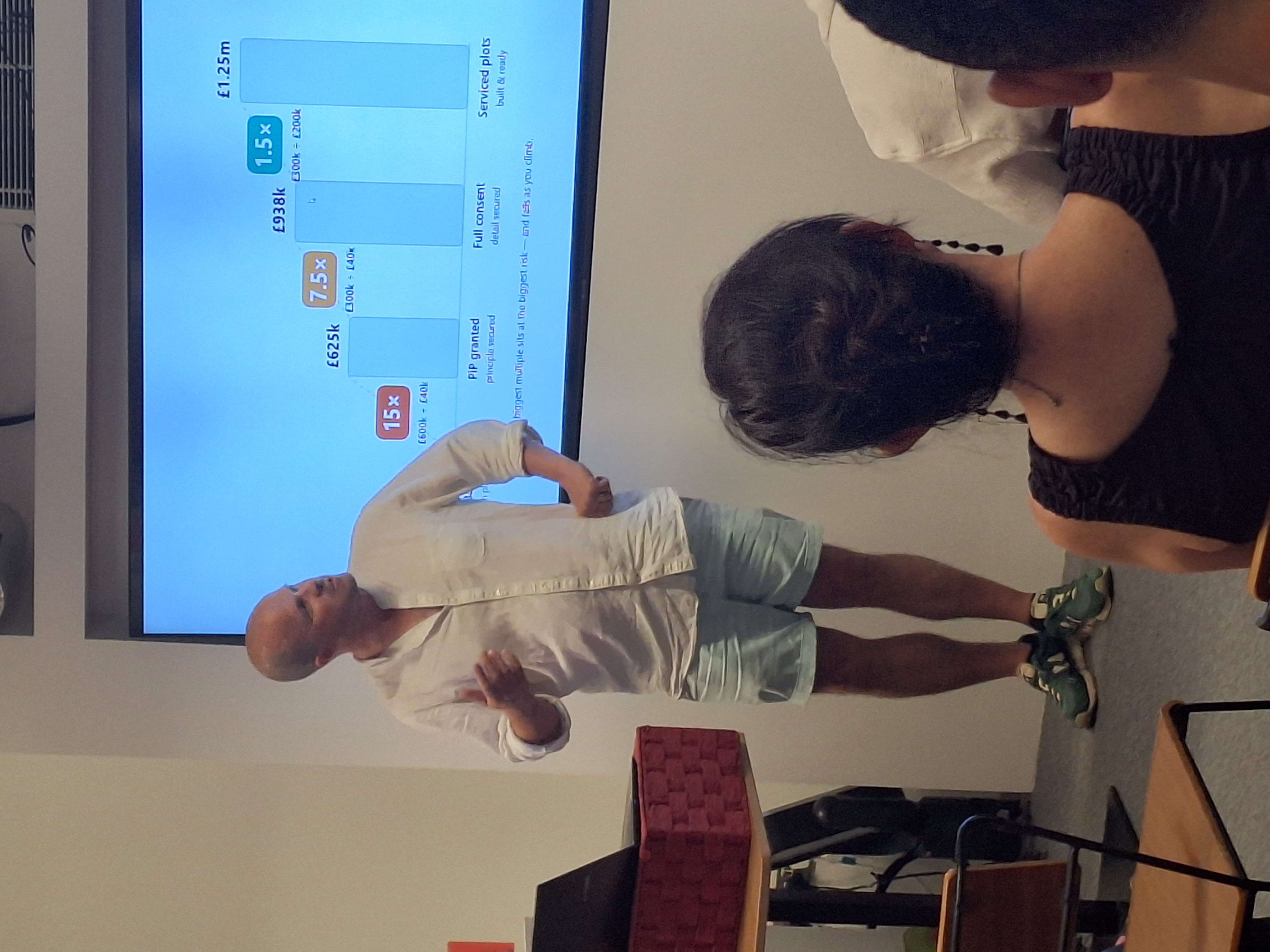
Livedin co-founder Thomas Howard equates the UK housebuilding sector to the processed food industry. " We produce really terrible housing, We know it's bad for us, and we know it's bad for the planet.".
It's a view that most architects share. Yet few have taken the bold step of trying to take the volume housebuilders on at their own game by building a pipeline of hundreds of development sites.
Livedin was founded by three architects in 2015, Tom, Charlie de Bono and Tomas Miller. (Howard and Miller also run a practice Howard Miller Workshop based in Stroud, Gloucestershire),
Initially, they experimented with a straightforward development model, buying and selling small sites locally, typically three or four plots each. This gave them a healthy 20% to 30% profit but they were limited by their lack of capital and could only afford to work on two or three projects at a time. The legal and planning processes were also “excruciatingly slow", Tom told the Developer Collective audience.
Livedin then switched to a Promotion Agreement model whereby the landowner retains ownership of the land until it's sold to the end-user.
But it found using traditional planning routes was also too slow to match the scale of its ambitions, so it began to use Permission in Principle (PiP).
Introduced in 2018, PiP was specifically designed to de-risk the principle of planning for small sites. It splits the process into two clear stages. Stage 1 is solely about location, land use, and amount of development. Stage 2 handles the technical details (architecture, ecology, access).
"Because Stage 1 is narrow, we realised something game-changing"", Tom explained. Although 80% to 90% of what is being assessed is purely procedural, 10% to 20% is subjective judgment so Livedin built an AI tool into which it fed "the entire National Planning Policy Framework (NPPF), local planning guidance, appeal decisions, and our own playbooks on how we navigate small sites".
This allowed Livedin to create PIP application documents almost instantly. but just as cruicially, it can also appeal refusals almost as quickly.
While 91% of Livedin's applications are initially refused because “case officers culturally hate PiPs because they want to see full, detailed architecture up front and they want to control everything " using AI means it can appeal almost all refusals. "By the time the appeals reach the Planning Inspectorate—who judge coldly on the text of the law rather than local politics - we win 60% of them" Tom said.
Recently Livedin has launched Cohort One — an architectural accelerator built to help turn practices into ‘hybrid developers’.
Using the AI tool architects can search for potential small sites while Livedin provide the legal templates and mentorship needed to sign up landowners.
Once the PIP is established the architect stays central to the project designing the custom homes for the self-builders. But instead of a developer walking away with the bulk of the profit, the model ensures architects get a significant slice of the value created when the serviced plots are sold.
“By combining code, capital, and a ready-made sales platform, we’re giving architects the agency to create genuine grassroots placemaking while finally claiming the developer rewards they deserve”.
Here are the five top takeaways from Tom's talk