A recent piece by developer Paul Caine argued that in the US food culture has become the primary anchor tenant of the modern city. Food and beverage concepts increasingly drive footfall, define land value, and activate previously lifeless urban districts.
But in the UK—and London in particular—sky-high business rates, crushing utility and staffing overheads, and the economics of commercial leases make independent restaurants look notoriously perilous.
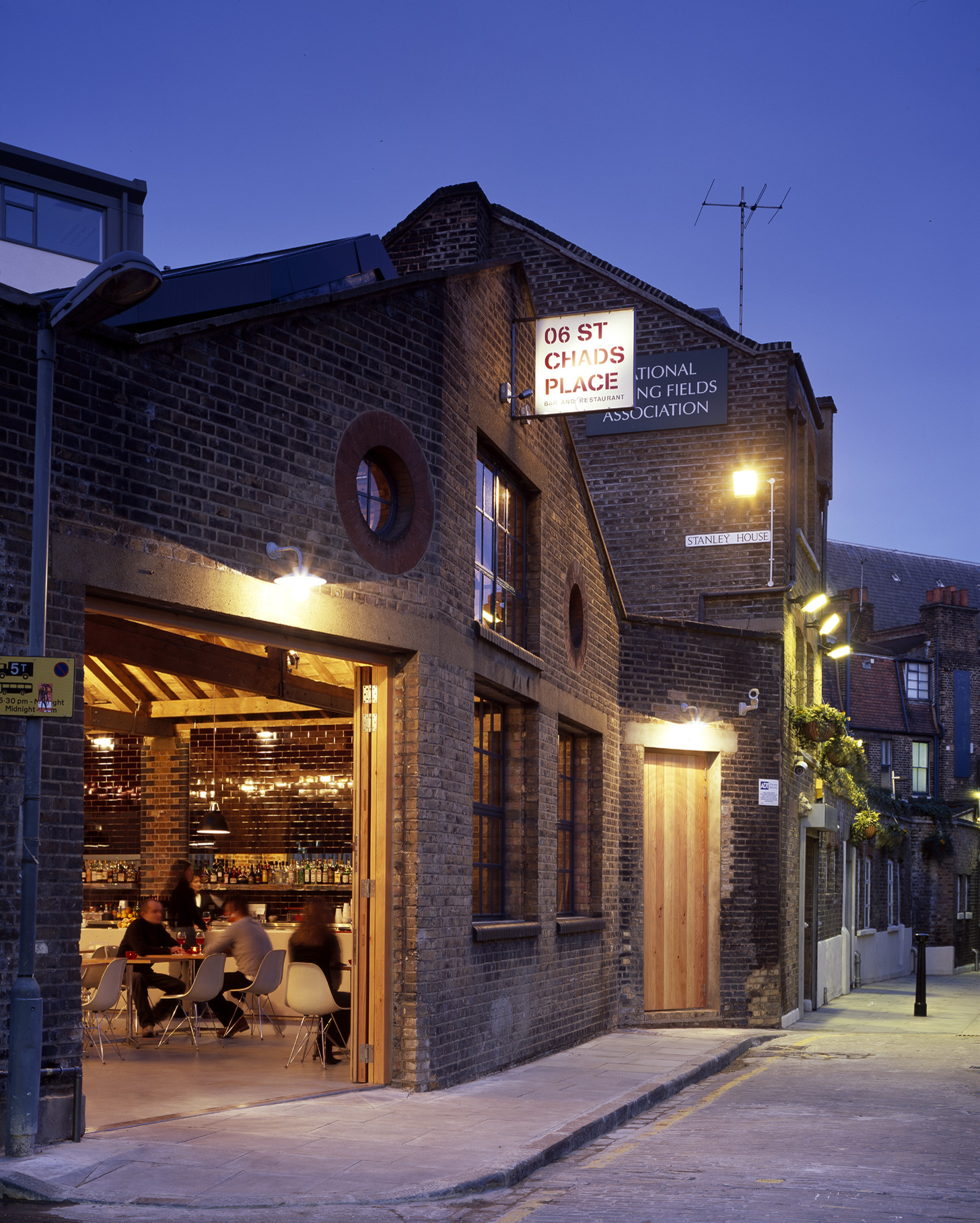
Few practices know this better than Squire & Partners. Back in 2003 long before King’s Cross transformed into a corporate tech hub, the practice converted a derelict Victorian mechanic’s workshop near their Wicklow Street studio into 6 St Chad’s Place. Part staff canteen, part neighbourhood bar and restaurant, it became an iconic local haunt.
"It was an amazing place and an amazing time in our lives," Henry Squire reflects. "It was a very wild and very fun time... We haven't managed to somehow do the same thing here [in Brixton]. Perhaps people are different; it’s expensive to drink, the generation is different... young people are different."
Yet when the company relocated south to Brixton to restore the dilapidated 1876 Bon Marché building into The Department Store, it didn't abandon hospitality. Instead, the practice came up with a different financial structure to make it work.
Rather than carving out ground-floor units for standard retail chains or handing over their fourth floor to a food-and-beverage operator, Squire & Partners chose to build and run Upstairs at The Department Store itself.
The rooftop restaurant, bar, and terrace operate on an intentionally accessible membership model—roughly £30 a month, with priority given to anyone with a SW postcode.
"Membership makes it sound really poncy. It isn't that" explains Squire. "It's just that Brixton is lively, and it is our office building... If you're prepared to give us your name, your telephone number, a picture, and 30 pounds a month, that's it. You're a member."
That simple model—pooling roughly 2,000 local members—solves the cash-flow dilemma of running an independent bar and restaurant.
"Because we have, I think, 2,000 members, we are able to run a really rubbish business—and by that I don’t mean rubbish in terms of quality of product, I mean one that doesn't make a lot of money. But because of the membership model, that helps to underpin the financial success of it. So, we don't have to stress if it's not full on a Friday night... we're not really in it to make money. It’s not about retiring to Barbados on it. It’s just about making it work and providing something for the local people here that they love."
Architects have had has an enduring love affair with hospitality. But why can architects make it work when traditional hospitality tenants so frequently go under?
The answer lies in the difference between a spec developer and an owner-occupier. A speculative commercial developer is chasing a 20% margin, an exit yield, or a sale to an institutional fund. By that calculation a rooftop must achieve maximum financial density from day one.
"We definitely paid over the odds for that [building]," Squire admits. "We didn't steal this building, for sure. But we were able to look at it as an owner-occupier. A commercial developer is looking for a 20% profit and maybe a sale either on planning or at the end into an investment vehicle...We can take that 20% out straight away. And we also say, well, it’s going to be our offices for the next 20 years."
Because Squire & Partners anchor the premises—supplemented by creative workspaces at Department Store Studios and community pop-ups downstairs—the food culture isn't a rent-generating line item. It is part of its identity and character.
"We're playing a long game here," Squire notes. "So that one day when we do, if we ever do sell it, hopefully it’s got a whole culture around it that will be attractive to someone... There are unicorns who will probably just pay for it because it fits with this whole cultural thing that they're sharing with the community.
For architects, the takeaway isn't that they should open a bar. It’s that moving past old professional boundaries—where they simply design a scheme and hand over the keys—allows them to share in the civic and commercial value they help create
"I think having done it for ourselves and thought, does that add value? Is that a good decision? Is that a bad decision? —not just from a purely philosophical design perspective but also cost and value... that has played well for us with clients," says Squire. "When they talk about things like internal rate of return (IRR) or this or that, we understand that language. We know the pain and the pleasure of either losing or making money and the risks that are involved."
"My grandfather used to say RIBA stood for 'Remember, I'm the bloody architect'," he adds. "We were quantity surveyors and project managers, and we did it all. And slowly over the years, we’ve given it away. Now there’s even this thing called a 'delivery architect'—we’re just sort of doing planning, and then suddenly it’ll be, 'Oh, can you just do me a CGI?' Property development is a natural pathway for architects if they're looking for how to expand."
Food is real estate. But making it thrive—whether a refurbished department store in Brixton or the much missed St Chad’s Place—means ensuring design and the numbers pull in the same direction.
Henry Squire will be speaking at the Developer Collective on Wednesday,18 November at The Society Building, W1 on Why Architects Should Build Their Own Future. Tickets can be booked here
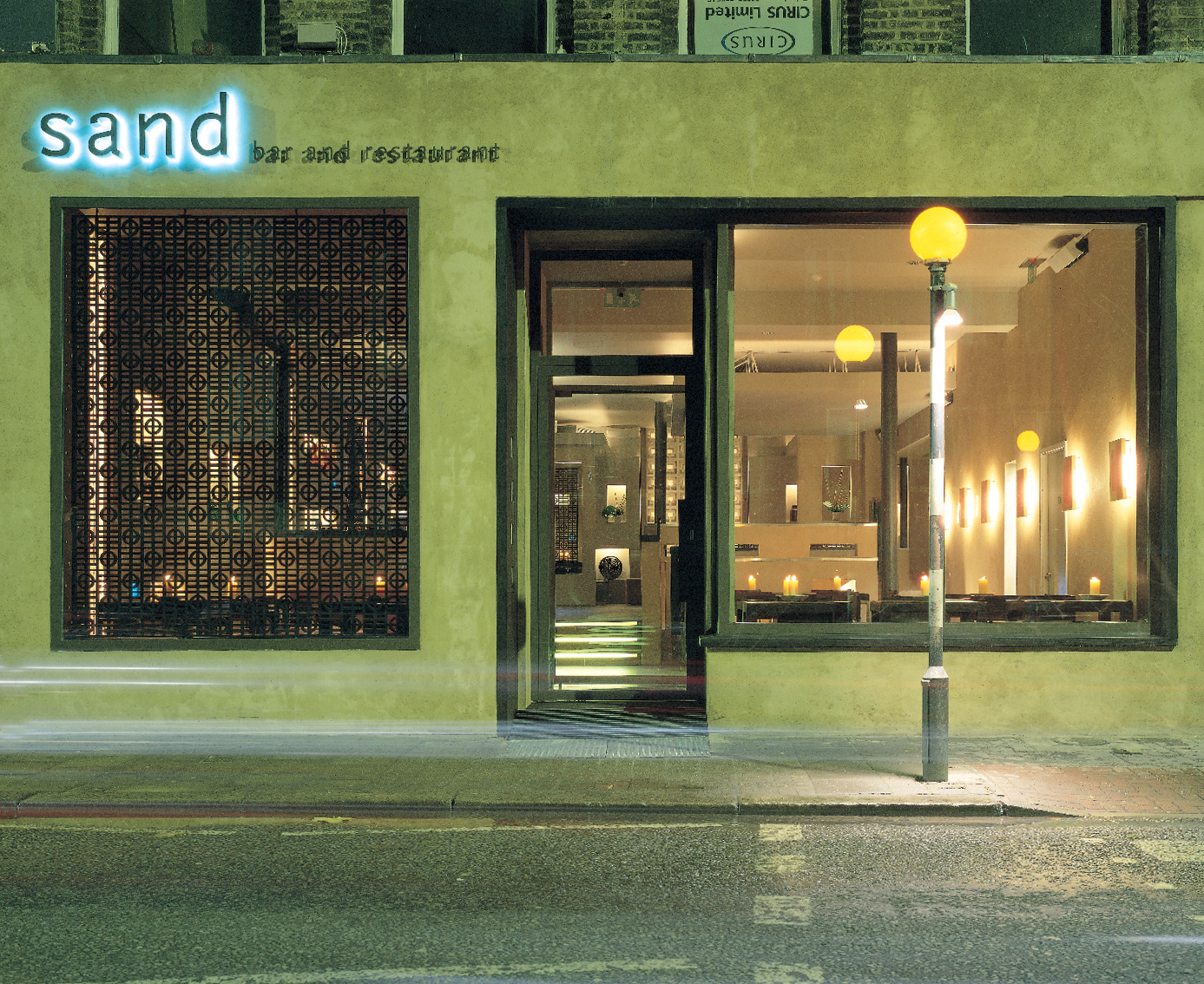
Image credits: The Department Store, Brixton ( above) Will Pryce, St Chad's Place, King's Cross (below left ) Will Pryce, The Department Store, Brixton (middle) James Jones, Sand bar & restaurant, Clapham (below right).